Queensland's Solar Battery Rebate Explained (2026)
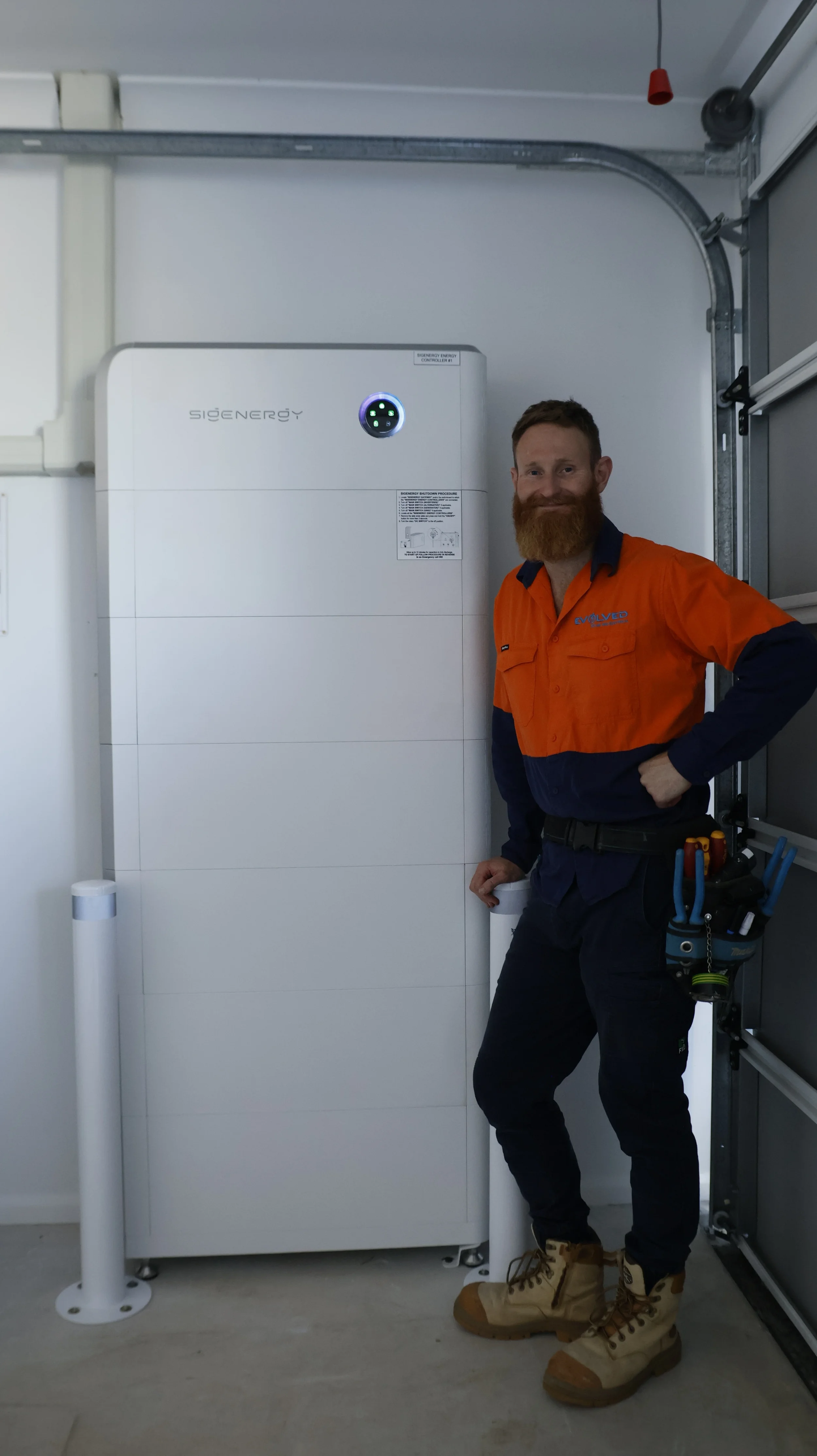
The federal government is currently handing Gold Coast homeowners thousands of dollars off the cost of a solar battery — and most people don't know it exists.
The Cheaper Home Batteries Program launched in July 2025 and has already supported over 185,000 Australian households. Right now, it's knocking around $3,100 to $4,500 off a typical home battery installation, with no means testing, no forms to fill in, and no cashback to wait for. The discount comes straight off your invoice.
But here's the catch: the rebate changes on 1 May 2026. After that date, the discount gets smaller — and it keeps getting smaller every six months until 2030. If you've been thinking about adding a battery to your solar system, the window to get the full rebate is right now.
This guide breaks down exactly how the program works, how much Gold Coast homeowners can save, and what changes after May.
- The federal Cheaper Home Batteries Program gives Gold Coast homeowners an upfront discount of around $3,100–$4,500 on a typical home battery
- The rebate is applied directly on your installer's invoice — no forms, no waiting
- The rebate changes on 1 May 2026 — batteries over 14 kWh will receive a significantly lower discount after that date
- No means testing — open to all homeowners with existing or new rooftop solar
- Evolved Solar is SAA-accredited and handles all rebate paperwork end to end
What Is the Cheaper Home Batteries Program?
The Cheaper Home Batteries Program is a federal government initiative that subsidises the cost of installing a home battery storage system. It launched on 1 July 2025 and is funded to the tune of $7.2 billion through to 2030 — a figure that was expanded from the original $2.3 billion after demand far exceeded government expectations.
The rebate works through the same mechanism as Australia's existing solar panel rebate scheme: Small-scale Technology Certificates (STCs). When your accredited installer puts in a battery, they generate certificates based on the battery's storage capacity. Those certificates have a dollar value, and that value is passed on to you as an upfront discount — applied directly to your quote. You don't apply for anything separately. There's no government form, no cashback application, no waiting.
It's worth noting that this is a separate program to the Queensland Battery Booster Program, which was a state government initiative that has since closed. A number of homeowners have asked whether they can still access the Battery Booster — the answer is no, but the federal program more than makes up for it.
How Much Can Gold Coast Homeowners Save?
The rebate is calculated on your battery's usable storage capacity, measured in kilowatt-hours (kWh). At current rates, you can expect roughly $311–$340 back per usable kWh — applied as a discount before you pay anything.
Here's what that looks like in practice for common battery sizes:
These figures are indicative — the actual rebate value fluctuates with the STC market price and your specific system. Your installer will show the exact discount applied on your quote.
For a typical Gold Coast home installing a 10–13.5 kWh battery, that's $3,000 to $4,500 off before the end of April. Not insignificant.
Who Is Eligible?
The program is deliberately broad. There's no means testing and no income cap — it's open to homeowners, small businesses, and community facilities across Queensland.
To qualify, your installation needs to meet these requirements:
Installed by an SAA-accredited installer (formerly known as CEC accreditation)
Uses a battery from the Clean Energy Council's approved product list
Connected to a rooftop solar system — new or existing panels both qualify
Battery usable capacity between 5 kWh and 100 kWh (the rebate applies to the first 50 kWh)
System must be capable of Virtual Power Plant (VPP) connection
That last point trips people up. VPP capability means your battery needs to have the technical ability to connect to a virtual power plant — it doesn't mean you have to actually join one. It's a hardware requirement, not a participation requirement.
One rebate applies per property (per electricity meter). If you own multiple properties, each can be claimed separately.
Already claimed the old QLD Battery Booster Program? You're still eligible for this federal rebate — they're entirely separate programs.
What Changes on 1 May 2026 — and Why It Matters
The rebate isn't ending. It's restructuring — and the restructure makes it meaningfully less generous, particularly for larger batteries.
Two things change simultaneously on 1 May:
1. The base rebate rate steps down. The STC factor — the number of certificates generated per kWh of battery capacity — drops from 8.4 to 6.8. That alone reduces the rebate on a 10 kWh battery by roughly $600.
2. A tiered structure kicks in for larger batteries. Instead of the same rate applying across all capacity, batteries over 14 kWh attract a reduced rate on the additional storage:
First 14 kWh: full rate
14–28 kWh: 60% of the full rate
28–50 kWh: 15% of the full rate
In practical terms, a homeowner installing a 13.5 kWh battery before May saves roughly $4,200–$4,590. After May, the same battery attracts around $3,400 — a difference of $800 or more. For a 20 kWh system, the gap is considerably larger.
After May, the rebate will also step down every six months rather than annually — meaning it erodes twice as fast as before.
Why did this happen? The program was a victim of its own success. The government expected people to install modestly-sized batteries averaging around 10–12 kWh. In reality, the average size installed in the first six months was 23 kWh — nearly double the projection. The tiered structure is designed to prevent the $7.2 billion fund from running dry before 2030.
Thinking about a battery? Get a free quote from Evolved Solar before the May 1 rebate change →
Why a Battery Makes Particular Sense on the Gold Coast
The rebate makes batteries more affordable nationwide, but there are a few reasons the Gold Coast case is especially strong.
Feed-in tariffs have shrunk to almost nothing. If you have existing solar panels, you'll know that the credit you earn for selling power back to the grid has dropped significantly. In South East Queensland, feed-in tariffs now sit at just 5–12 cents per kWh depending on your retailer. Meanwhile, the electricity you buy from the grid costs 30–35 cents per kWh. Every unit of solar energy you store in a battery and use yourself is worth two to three times more than selling it back. A battery is how you stop donating power to the grid.
Storm season means grid outages are a real risk. The Gold Coast and SE Queensland sit in a severe storm corridor. Cyclone Alfred in 2025 was a sharp reminder that extended outages happen — and when they do, a battery keeps your lights, fridge, internet, and essential circuits running without a generator. For families with medical equipment, home offices, or simply an aversion to throwing out a fridge full of food, backup power has a value that goes beyond the bill savings.
Energex peak tariffs reward smart battery use. If you're on a time-of-use tariff with Energex, your battery can be programmed to discharge during peak demand periods — typically late afternoon through evening — when grid electricity is most expensive. The savings stack on top of the overnight storage benefit.
Most Gold Coast homes already have solar. Around 30% of Gold Coast homes have rooftop solar, one of the highest rates in Australia. If yours is one of them, you don't need new panels to qualify. A battery retrofit on an existing solar system is fully eligible for the rebate.
How the Rebate Is Applied — No Paperwork for You
This is the part that surprises most people. You don't lodge an application. You don't wait for a government rebate to come through. You don't chase paperwork.
Here's how it works in practice:
You get a quote from an SAA-accredited installer like Evolved Solar
The rebate is calculated and deducted from your quote upfront — what you see is what you pay
Evolved Solar handles all STC registration and program compliance on your behalf
You pay the net amount and your system gets installed
The whole rebate process runs in the background. Your only job is to get a quote before the rate changes.
What Batteries Are Available?
To qualify for the rebate, your battery must appear on the Clean Energy Council's approved product list. At Evolved Solar, we install Sigenergy and GoodWe battery systems — both fully approved and well-suited to Gold Coast homes and businesses.
Sigenergy's modular systems are particularly flexible for larger homes wanting scalable storage, while GoodWe offers strong value for standard residential installations. We'll recommend the right system for your energy use, roof setup, and budget when you come in for a quote.
How to Get Started
If you've been sitting on the fence about adding a hybrid battery system, the next few weeks are genuinely the best time to move. The rebate is at its highest point right now, the deadline is real, and the process is straightforward.
Evolved Solar is a Gold Coast-based, SAA-accredited team of licensed electricians. We handle the full installation — design, approvals, STC paperwork, and commissioning — so you don't have to navigate any of it yourself.
Get a free, no-obligation battery quote before the 1 May rebate change. We'll assess your current solar setup, recommend the right battery size, and show you exactly what the rebate looks like applied to your system.
Frequently Asked Questions
Can I claim the rebate if I don't have solar yet?
You need to be connected to a rooftop solar system to qualify. If you don't have panels yet, we can quote a combined solar and battery system — both components will attract their respective rebates.
Does the rebate apply if I already claimed the old QLD Battery Booster Program?
Yes. The Battery Booster was a separate state program. The federal Cheaper Home Batteries Program is a completely different scheme and is not affected by any previous state rebate you may have claimed.
What's the difference between the rebate before and after May 1?
For a typical 10 kWh battery, the difference is roughly $600. For larger batteries (13.5–20 kWh), the gap is considerably wider due to the new tiered structure. The longer you wait after May, the smaller the rebate becomes — it steps down every six months.
Do I have to join a Virtual Power Plant?
No. Your battery must be technically capable of VPP connection, but you're under no obligation to actually join one.
How long does installation take?
Most residential battery installations are completed in a single day. Lead times on system availability can vary, so the sooner you book your quote, the better your chances of locking in the current rebate rate.